From Novice to Expert: Harnessing 15 Years of Software Development Wisdom

Introduction

For businesses navigating today’s digital landscape, choosing the right software development partner is crucial for success. Whether you’re a startup founder looking to validate your idea or an enterprise aiming to scale operations, finding reliable support can be challenging. Nerdware Labs has been at the forefront of this journey for 15 years, guiding businesses through every step from concept to launch and beyond.

Understanding the Importance of Reliable Software Development Services

When you’re building a digital product, selecting the wrong software development service provider can lead to costly mistakes. Here are some common challenges that businesses face when choosing a reliable partner:

  • Finding a team with the right experience and expertise.
  • Ensuring project success from start to finish.
  • Maintaining long-term partnerships for ongoing support.

Nerdware Labs’ Expertise in Custom Solutions, Enterprise-Scale Applications, and Scalable Mobile Apps

Nerdware Labs has built its reputation on delivering custom software solutions tailored to our clients’ unique needs. Our expertise spans a wide range of industries, including healthcare, finance, retail, education, logistics, manufacturing, SaaS platforms, and enterprise systems.

Custom Software Solutions

We understand that every business is different, which is why we offer highly customized software solutions designed specifically for your organization’s requirements. Whether you need an internal application or an enterprise-level system, our team of experienced developers can help bring your vision to life.

Enterprise-Scale Applications

For businesses looking to scale their operations and reach new heights, Nerdware Labs provides robust enterprise-scale applications that meet the highest standards of reliability and performance. Our solutions are designed to handle complex integrations and ensure seamless scalability across different environments.

Scalable Mobile Apps

In today’s mobile-first world, having a scalable mobile app is crucial for engaging your audience effectively. We develop high-performance, responsive mobile apps using cutting-edge technologies like React Native and Flutter. These apps can be easily scaled as your business grows, ensuring you stay ahead of the competition.

Addressing Common Challenges: Finding a Reliable and Experienced Team, Ensuring Project Success, and Maintaining Long-Term Partnerships

Finding a Reliable and Experienced Team

One of the most significant challenges businesses face is finding a reliable and experienced team to work with. At Nerdware Labs, we pride ourselves on building long-term relationships based on trust and mutual respect. Our developers are not just skilled professionals but also passionate about delivering exceptional results.

  • Transparent Communication: We prioritize open lines of communication throughout the project lifecycle.
  • Regular Check-ins: Regular meetings ensure that all parties stay aligned with project progress and any changes or updates.
  • Clear Expectations: From the outset, we establish clear goals and milestones to keep everyone on track.

Ensuring Project Success

Our team is committed to delivering successful projects every time. Here’s how we achieve this:

  • Detailed Planning: We conduct thorough requirements analysis to ensure that our solutions meet your specific needs.
  • Quality Assurance: Rigorous testing ensures that our software meets the highest standards of quality and reliability.
  • Post-Launch Support: After deployment, we provide ongoing support to address any issues or make necessary adjustments.

Maintaining Long-Term Partnerships

Building long-term relationships is at the heart of what Nerdware Labs does. Here’s how we foster these partnerships:

  • Regular Reviews: We schedule regular check-ins to discuss progress and identify areas for improvement.
  • Open Feedback Channels: Encouraging open communication helps us understand your evolving needs and ensure that our solutions continue to meet your expectations.
  • Flexible Engagement Models: Whether you need a full-time team or occasional support, we offer flexible options to accommodate your specific requirements.

Conclusion

Choosing the right software development service provider is not just about finding someone who can deliver code. It’s about building a partnership where both parties grow together and achieve mutual success. At Nerdware Labs, our 15 years of experience have taught us that reliability, expertise, and long-term commitment are key ingredients for thriving digital products.

By leveraging our extensive knowledge in custom solutions, enterprise-scale applications, and scalable mobile apps, we can help your business navigate the complexities of software development with confidence. Whether you’re a startup founder or an established enterprise looking to modernize your operations, Nerdware Labs is here to support you every step of the way.
“`
Navigating the Digital Landscape: The Expertise Required for Successful Mobile App Development

Introduction

For businesses of all sizes, a robust and scalable mobile app is not just an option but a necessity in today’s digital landscape. Whether you’re a startup founder looking to validate your idea or an enterprise aiming to modernize its operations, the role of a mobile developer becomes pivotal.

Understanding User Behavior

Mobile developers must possess a deep understanding of how users interact with mobile devices. They need to be aware of common pain points such as slow load times, confusing navigation, or insufficient functionality. By addressing these issues proactively, they can enhance user satisfaction and reduce churn rates. For instance, optimizing app performance through efficient coding practices ensures that the application runs smoothly even on older hardware.

The Role of a Mobile Developer

A mobile developer’s expertise spans across various domains including design, development, and deployment. They are responsible for turning business ideas into tangible applications that engage users effectively while ensuring seamless integration with existing systems. This multifaceted role requires not only technical proficiency but also an understanding of user behavior, market trends, and the unique needs of different industries.

Market Trends and Industry Knowledge

Staying updated with current market trends is crucial for mobile developers to ensure their applications remain relevant and competitive. This involves keeping abreast of new technologies like augmented reality (AR), artificial intelligence (AI), or blockchain, which can significantly impact user experience and business outcomes. Additionally, understanding the nuances specific to each industry helps in tailoring solutions that meet unique requirements.

Industry-Specific Solutions

Different sectors require tailored approaches when developing mobile applications. For example, healthcare providers need secure yet intuitive interfaces for patient management systems, whereas e-commerce companies focus on enhancing checkout processes for seamless transactions. By leveraging their expertise and knowledge of these verticals, mobile developers can deliver solutions that not only meet but exceed customer expectations.

The Importance of Hiring an Experienced Mobile Developer

While hiring a mobile developer may seem like a straightforward decision, it’s essential to consider the long-term implications. An inexperienced or poorly versed developer might introduce bugs, security vulnerabilities, or design flaws into your application, potentially leading to significant financial and reputational losses. Conversely, investing in experienced professionals ensures that your project stays on track, adheres to industry standards, and delivers measurable business benefits.

Expertise in End-to-End Development

Experienced mobile developers possess comprehensive knowledge across multiple stages of the development lifecycle—from ideation through deployment. They can handle complex integrations with third-party services or legacy systems without compromising security or performance. Furthermore, they often have experience working within agile frameworks like Scrum or Kanban, enabling efficient collaboration among team members and stakeholders.

Strong Communication Skills

Effective communication is vital for successful project management. Experienced developers are adept at articulating technical concepts to non-technical counterparts, ensuring everyone involved understands the scope of work and potential challenges. This clarity facilitates smoother decision-making processes and reduces misunderstandings that could arise during implementation phases.

Nerdware Labs: Your Trusted Partner in Mobile App Development

At Nerdware Labs, we pride ourselves on offering flexible engagement models tailored to meet your specific needs. Whether you’re looking for a full-time developer or prefer a more project-based approach, our team of experts can help scale your mobile development efforts effectively.

Flexible Engagement Models

We recognize that every business has unique requirements and growth trajectories. Our agile methodologies allow us to adapt quickly to changing market conditions or evolving client needs. For instance, we might start with a proof-of-concept (PoC) phase to validate the viability of an idea before committing to full-scale development.

Proven Delivery Capabilities

Our track record speaks for itself—we have successfully delivered numerous high-quality mobile applications across diverse industries. From MVPs to enterprise-grade solutions, our developers consistently deliver projects on time and within budget while maintaining a focus on quality over quantity.

Transparent Communication

At Nerdware Labs, we believe in open and honest communication throughout the entire project lifecycle. Regular updates keep you informed about progress, challenges encountered, and proposed solutions. This transparency fosters trust between us and our clients, enabling smoother collaboration and better outcomes.

Conclusion

In conclusion, hiring an experienced mobile developer is a strategic decision that can significantly impact your business’s digital presence and growth potential. By choosing Nerdware Labs as your trusted partner in this journey, you gain access to seasoned professionals who understand the intricacies of modern app development. Whether you’re just starting out or looking to scale up, our flexible engagement models ensure that we align seamlessly with your objectives.

FAQ

What is the role of a mobile developer?

A mobile developer plays a crucial role in transforming business ideas into functional and engaging applications for mobile devices. They are responsible for designing, coding, testing, and deploying applications while ensuring they meet user needs and industry standards.
“`

Accelerate Your Startup’s Growth with a Professional MVP: A Guide for Founders

Introduction

In today’s competitive business landscape, validating a new product or service idea is crucial before investing significant resources. An MVP, or Minimum Viable Product, serves as the perfect tool for founders to test their ideas quickly and efficiently. By focusing on delivering just enough functionality to gather user feedback, MVPs allow startups to pivot based on real customer needs without spending too much time or money.

Nerdware Labs is here to help you navigate this process with our mobile app development services. Our team of experienced developers can guide you through the entire MVP creation journey—from ideation and design to implementation and testing. Let’s explore how an MVP can accelerate your startup’s growth and ensure that every step aligns with your business goals.

Understanding the MVP

An MVP is a simplified version of your product or service, designed to provide value to users without requiring extensive development resources. It typically includes core features necessary for user engagement and feedback collection. By focusing on essential functionalities, you can quickly gather insights into what works best and what needs improvement.

Key Benefits of an MVP

  1. Quick Feedback Loop: With a minimal set of features, you can receive immediate feedback from users, allowing you to make adjustments before investing in more complex development.
  2. Reduced Risk: An MVP helps mitigate risks associated with launching a full-scale product by ensuring that your core value proposition resonates with potential customers.
  3. Cost Efficiency: Developing an MVP allows you to allocate resources efficiently, saving time and money compared to building a fully functional product from scratch.

Nerdware Labs’ Role in Your MVP Journey

At Nerdware Labs, we understand the importance of having a reliable partner during your startup journey. Our team is dedicated to helping founders like yourself validate their ideas through mobile app development services. Here’s how our expertise can support you:

Expert Guidance and Support

Our developers are experts in product thinking and clean architecture. They ensure that every feature added aligns with the overall vision of your startup, providing a solid foundation for future growth.

Scalable Solutions

We offer scalable solutions tailored to meet the unique needs of startups. Whether it’s developing an MVP or scaling up to enterprise-level applications, we have the expertise to support you throughout different stages of your product lifecycle.

Transparent Communication and Collaboration

Effective communication is key to successful project management. Our team maintains open lines of communication with our clients, ensuring that everyone stays aligned on goals and progress. We also foster a collaborative environment where feedback is encouraged and valued.

Creating Your MVP: A Step-by-Step Guide

Creating an MVP involves several stages, each requiring careful planning and execution. Here’s a general outline to help you get started:

Stage 1: Ideation and Planning

Start by defining your core problem or opportunity that your product aims to solve. Conduct market research to understand user needs and preferences. This stage sets the foundation for your MVP.

Stage 2: Designing Your MVP

Design is critical in creating an MVP that resonates with users. Collaborate closely with designers to create wireframes, mockups, and prototypes. Ensure these designs are intuitive and easy to use.

Stage 3: Development and Testing

Once the design phase is complete, begin developing your MVP using modern technologies such as Swift, React, or Node.js. Prioritize testing phases to identify potential issues early on. Iterate based on user feedback until you achieve a robust MVP.

Stage 4: Launching Your MVP

Prepare for launching your MVP by setting up analytics tools and social media channels. Monitor performance metrics closely, making adjustments as needed. Encourage users to provide feedback through surveys or direct communication channels.

Conclusion

Developing an MVP is not just about creating a functional product; it’s about validating your idea with real user input. By leveraging Nerdware Labs’ mobile app development services, you can accelerate your startup’s growth and increase the likelihood of success. Embrace this opportunity to turn your vision into reality, and let us help guide you every step of the way.


For more insights on accelerating your startup’s growth with an MVP, check out our blog or reach out directly at [Contact Form]. Let’s work together to bring your idea to life!

Why UI/UX Design Matters: Elevating Your Product to the Next Level

Introduction

In today’s digital age, the importance of user experience (UX) and user interface (UI) design cannot be overstated. A well-designed product not only enhances usability but also significantly impacts a company’s bottom line by improving customer satisfaction and driving revenue growth. However, finding or hiring experienced UI/UX designers who can elevate your product’s design to meet modern standards is often challenging.

This article aims to address the specific pain point of understanding why investing in UI/UX design is essential for long-term success and how Nerdware Labs can help clients achieve this goal.

The Importance of User Experience and User Interface Design

User experience (UX) refers to the overall satisfaction a user experiences when interacting with your product. It encompasses all aspects of interaction, including usability, accessibility, and efficiency. On the other hand, user interface (UI) design focuses on how users interact with the product through visual elements such as buttons, icons, and text.

A well-designed UI/UX can make a significant difference in how users perceive and engage with your digital products. It ensures that your product is intuitive, easy to use, and visually appealing, which are crucial factors for user satisfaction and retention.

Why Is UI/UX Design Important for Startups?

For startups, the importance of UI/UX design cannot be overstated. These companies often have limited resources but need to make a strong first impression on potential customers. A poorly designed product can lead to frustration and abandonment, while a well-designed one can result in increased engagement and positive word-of-mouth referrals.

Key Elements of UI/UX Design

UI/UX design involves several key elements that contribute to an effective user experience:

  • Usability: Ensuring that users can easily navigate through your product without confusion or difficulty.
  • Accessibility: Making sure the design is usable for people with disabilities, such as those who use screen readers or have limited motor skills.
  • Aesthetics: Designing a visually appealing interface that aligns with your brand identity and enhances user engagement.
  • Responsiveness: Ensuring that the product works seamlessly across different devices and platforms.

UI/UX Design in Modern Digital Products

In modern digital products, UI/UX design plays an increasingly critical role. With the proliferation of mobile apps and web applications, a seamless and intuitive experience is more important than ever. Here are some trends and best practices to consider:

UI/UX Design Trends and Future

  • Responsiveness: As users continue to access digital products on various devices (e.g., smartphones, tablets, desktops), responsiveness has become an essential design consideration.
  • Personalization: Tailoring the user experience based on individual preferences or behaviors can significantly enhance engagement and satisfaction.
  • Accessibility Features: Incorporating accessibility features such as voice commands, screen readers, and keyboard navigation is crucial for a broader audience.

UI/UX Design Case Studies and Trends

To illustrate these concepts, let’s examine some real-world examples:

Case Study: Nerdware Labs’ Snuggle Platform

Nerdware Labs has developed an in-house social networking platform called Snuggle. This platform demonstrates the company’s ability to design products from scratch, build scalable mobile applications, implement real-time communication features, and integrate AI features over time.

By focusing on UI/UX design, Snuggle not only provides a seamless user experience but also showcases Nerdware Labs’ technical capabilities in these areas.

Future of UI/UX Design

Looking ahead, the future of UI/UX design will likely involve more emphasis on personalization and accessibility. As technology continues to evolve, designers must stay abreast of new trends and adapt their approaches accordingly.

Conclusion

In conclusion, investing in UI/UX design is essential for modern digital products. It not only enhances usability but also drives customer satisfaction and revenue growth. Nerdware Labs can help clients elevate their product’s design by providing experienced UI/UX designers who understand the importance of these elements.

By addressing common pain points such as difficulty finding or hiring experienced designers, Nerdware Labs aims to ensure that businesses have access to high-quality UI/UX services that meet modern standards and contribute to long-term success.
“`md

Nerdware Labs: The Ultimate Software Development Partner

Introduction

In today’s digital age, businesses are constantly seeking ways to improve their operations, automate processes, and stay ahead of competitors. One critical area where technology plays a pivotal role is in the realm of software development. Whether you’re a startup founder looking to validate your idea or an enterprise organization aiming for seamless integration with modern technologies, choosing the right software development partner can make all the difference.

Nerdware Labs has been at the forefront of this transformation journey, offering custom software solutions that not only meet but exceed expectations. Our team of experienced engineers and designers is dedicated to providing scalable, high-quality products tailored to your unique needs. In this article, we will delve into why Nerdware Labs stands out as the best choice for your next project.

Why Choose Nerdware Labs?

Quality Software Development

Nerdware Labs prides itself on delivering custom software solutions that are not only functional but also robust and scalable. Our team of developers is committed to understanding your business objectives, ensuring every solution aligns with your strategic goals. From internal applications to enterprise systems, we provide tailored solutions that optimize efficiency and support long-term growth.

Transparent Communication

Effective communication is the cornerstone of any successful partnership. At Nerdware Labs, we prioritize open dialogue throughout the project lifecycle. Our team keeps you informed about progress, milestones achieved, and areas for improvement. This transparency fosters trust and ensures alignment between expectations and outcomes.

Predictable Pricing

One common concern when engaging with a new software development partner is uncertainty around costs and timelines. Nerdware Labs addresses this by offering transparent pricing models that are fair and predictable. We provide upfront estimates to avoid surprises, ensuring you have clear visibility into project budgets from the outset. This predictability helps alleviate budget concerns and allows for smoother decision-making processes.

Addressing Common Objections

Concerns About Timeline and Budget

Many potential clients hesitate due to concerns about timelines and associated costs. At Nerdware Labs, we understand these challenges and work diligently to mitigate them. We employ agile methodologies that allow us to adapt quickly to changing requirements while maintaining a clear roadmap for completion. Additionally, our transparent pricing models ensure you have accurate cost estimates from the beginning, reducing uncertainty.

Technical Expertise

Another common concern is whether Nerdware Labs possesses the necessary technical expertise. Our team comprises seasoned professionals with diverse backgrounds in various domains such as mobile app development, web design, and enterprise software solutions. We stay updated on the latest technologies through continuous learning and professional certifications. This ensures we can tackle complex projects confidently and deliver high-quality results.

Long-Term Partnership Potential

Lastly, some clients worry about long-term compatibility and potential for growth. At Nerdware Labs, we foster strong, lasting relationships based on mutual trust and shared goals. We value our client’s success as much as their business objectives, ensuring that the partnership evolves alongside your organization’s needs. Our commitment to transparency and open communication helps build a foundation of trust that strengthens over time.

Conclusion

Choosing the right software development partner is crucial for any business looking to leverage technology effectively. Nerdware Labs stands out by offering quality software solutions, transparent communication channels, and predictable pricing models. By addressing common concerns such as timelines, budget uncertainties, technical expertise, and long-term partnership potential, we aim to alleviate these worries and position ourselves as the ideal partner for your next project.

FAQ

What is Snuggle Platform?

Snuggle is an in-house social networking platform developed by Nerdware Labs. It showcases our ability to design products from scratch, build scalable mobile applications, implement real-time communication features, integrate AI capabilities over time, and launch consumer products successfully.

How to Choose a Reliable Software Partner?

When evaluating software development partners, consider factors like expertise in your specific domain, track record of delivering projects on time and within budget, commitment to transparent communication, and ability to adapt to changing requirements. Nerdware Labs excels in all these areas and can be an excellent choice for businesses seeking reliable software solutions.


Call to Action

If you’re ready to explore how Nerdware Labs can help your organization achieve its digital transformation goals, we invite you to schedule a consultation with our team today. Let’s discuss your project requirements and identify the most suitable technical solution together.
“`

Why Your Startup Needs an MVP and How to Develop One Successfully

Introduction

In the world of startups, validation is key. Whether you’re just starting out or looking to validate your business ideas, a Minimum Viable Product (MVP) can be a game-changer. An MVP allows you to test your product with real users, gather valuable feedback, and iterate quickly. In this article, we’ll explore why an MVP is crucial for startup success and provide actionable steps on how to develop one successfully.

The Importance of a Solid MVP

An MVP serves as the foundation upon which your digital product can be built. It allows you to validate whether there’s a market for your idea before investing significant resources into full-scale development. By creating an MVP, you can identify potential issues early and make necessary adjustments without wasting time or money.

Product-Market Fit

One of the most critical aspects of developing an MVP is ensuring that it aligns with your target audience’s needs. Understanding product-market fit means knowing what features are essential for your MVP to be successful. This involves conducting market research, analyzing user feedback, and continuously iterating based on real data.

Business Validation

An MVP provides a clear picture of whether your business idea has potential. By building a minimum viable version of your product, you can demonstrate its value to investors or partners who may consider funding or collaborating with you. An effective MVP showcases the feasibility of your concept and helps build credibility for your startup.

Steps to Develop an Effective MVP

Developing an MVP requires careful planning and execution. Here are some actionable steps to help you create a successful MVP:

1. Define Your MVP Goals

Start by defining clear goals for your MVP. What problem does it solve? Who is the target audience? By setting specific objectives, you can ensure that your MVP aligns with your startup’s vision.

2. Conduct Market Research

Before diving into development, conduct thorough market research to understand your potential users and competitors. This will help you identify gaps in the market and inform feature prioritization for your MVP.

3. Prioritize Features Based on User Feedback

As you gather feedback from early adopters or beta testers, prioritize features that address their needs most effectively. Focus on delivering value to your users while keeping development costs manageable.

4. Choose the Right Technology Stack

Select a technology stack that supports your MVP goals and is scalable for future growth. Consider factors such as platform compatibility, developer expertise, and long-term maintenance requirements.

5. Build a Robust Technical Architecture

Develop a solid technical architecture to ensure scalability, reliability, and maintainability of your MVP. This includes designing databases, APIs, and integrating third-party services where necessary.

6. Design an Engaging User Experience

Invest in user experience (UX) design to create an intuitive interface that resonates with your target audience. Focus on simplicity, usability, and aesthetics to ensure a positive user experience throughout the MVP phase.

7. Test Your MVP Thoroughly

Conduct rigorous testing of your MVP to identify any bugs or usability issues. Gather feedback from users and make necessary improvements before launching it publicly.

Common Challenges in MVP Development

Developing an MVP can be challenging, but with proper planning and execution, you can overcome these common obstacles:

1. Limited Resources

One of the biggest challenges is having limited resources to allocate towards development. To address this, prioritize features based on user feedback and consider outsourcing non-core tasks.

2. Uncertainty About Features

Determining which features are essential for your MVP can be difficult. Use market research and user testing data to inform feature prioritization decisions.

3. Balancing Functionality and Simplicity

Balancing the need for functionality with simplicity is crucial. Focus on delivering value through core functionalities rather than overcomplicating the MVP with too many features.

Best Practices for MVP Success

To increase your chances of success, follow these best practices:

1. Iterate Continuously

MVP development should be an iterative process. Regularly gather feedback from users and make incremental improvements to refine your product.

2. Leverage Open Source Tools

Utilize open-source tools and frameworks that can save time and resources while still providing robust functionality for your MVP.

3. Collaborate with Experts

Engage experts in areas such as design, development, or marketing who can provide valuable insights and accelerate the MVP process.

Conclusion

Developing an MVP is a critical step in validating your startup idea and building a successful digital product. By following these actionable steps and best practices, you can create an effective MVP that sets your business on the right path for growth. If you’re looking to develop an MVP but need guidance or support, Nerdware Labs is here to help.

FAQ

What is an MVP?

An MVP stands for Minimum Viable Product. It’s a simplified version of your product designed to test its core functionality and gather user feedback before full-scale development.

How do I validate my startup idea with an MVP?

By building a minimum viable version of your product, you can identify potential issues early and make necessary adjustments without wasting resources. Gather feedback from users and iterate based on their input.

What are common challenges in MVP development?

Common challenges include limited resources, uncertainty about features, and balancing functionality with simplicity. Addressing these obstacles requires careful planning and execution.

How do I choose the right technology stack for my MVP?

Select a technology stack that supports your MVP goals and is scalable for future growth. Consider factors such as platform compatibility, developer expertise, and long-term maintenance requirements.

What are some best practices for successful MVP development?

Iterate continuously, leverage open-source tools, and collaborate with experts to accelerate the MVP process while ensuring it meets user needs effectively.
“`

Unlock Your Business Potential with a Well-Designed Mobile App


Unlock Your Business Potential with a Well-Designed Mobile App

Introduction

In today’s digital age, businesses are constantly seeking ways to improve their efficiency and modernize their systems. One effective solution is the implementation of a well-designed mobile application (app). A mobile app can help streamline operations, enhance customer engagement, and provide valuable insights into your business performance.

This article aims to educate visitors about the benefits of mobile app development for various industries such as SaaS businesses, enterprises, product companies, and SMEs. We will discuss how mobile apps can transform your business by addressing common pain points like legacy systems, manual processes, and outdated software.

The Importance of Mobile App Development

Mobile app development is a crucial service offered by Nerdware Labs. Our team specializes in designing, developing, and maintaining custom mobile applications tailored to meet the unique needs of each client. By leveraging modern technologies such as Swift, Kotlin, React Native, and Firebase, we can create scalable and high-performance apps that deliver exceptional user experiences.

Benefits of Mobile App Development

Mobile app development offers several benefits for businesses:

  • Enhanced Customer Engagement: A mobile app allows you to engage with your customers in real-time through push notifications, in-app messaging, and interactive features. This direct communication channel can help build stronger relationships with your audience.
  • Improved Operational Efficiency: Mobile apps enable remote access to critical business data, reducing the need for employees to rely on physical devices or outdated systems. This leads to faster decision-making processes and improved productivity.
  • Data Collection and Analysis: With mobile app development, you gain access to valuable user data that can be used to analyze customer behavior, preferences, and trends. This information helps businesses make informed decisions about product improvements, marketing strategies, and overall business growth.

Choosing a Reliable Mobile App Developer

When selecting a mobile app developer for your project, consider the following factors:

  • Experience and Expertise: Look for developers who have experience in developing apps across different platforms (iOS, Android) and industries. Experience with specific technologies like React Native or Flutter can also be beneficial.
  • Communication Skills: Effective communication is crucial when working on a mobile app development project. Choose a developer who listens to your needs and provides regular updates throughout the process.
  • Quality Assurance: Ensure that the developer has robust quality assurance processes in place, including testing for bugs, performance issues, and security vulnerabilities. This helps deliver high-quality apps with minimal downtime or user frustration.

How Mobile App Development Can Drive Business Growth

Mobile app development can significantly contribute to your business growth by:

  • Attracting New Customers: A mobile app serves as a digital storefront where customers can easily access products or services, leading to increased sales and revenue.
  • Improving Customer Satisfaction: By providing convenient and personalized experiences through the app, you can enhance customer satisfaction and loyalty. This results in higher retention rates and positive word-of-mouth referrals.
  • Competitive Advantage: Investing in mobile app development positions your business as a leader in your industry by offering innovative solutions that differentiate from competitors.

Conclusion

Mobile app development is an essential service for businesses looking to modernize their operations, engage with customers more effectively, and drive growth. By leveraging the benefits of mobile apps, you can unlock new opportunities and stay ahead of the competition. Nerdware Labs is here to help you achieve your goals by providing expert mobile app development services.

FAQ

What is Mobile App Development?

Mobile app development involves designing, developing, testing, and deploying applications for smartphones or tablets using platforms like iOS (Apple) and Android (Google).

How Can I Choose a Reliable Mobile App Developer?

When selecting a developer, consider their experience in your industry, communication skills, quality assurance processes, and expertise with specific technologies.

What Are the Benefits of Mobile App Development?

Mobile app development offers enhanced customer engagement, improved operational efficiency, data collection and analysis capabilities, and can drive business growth by attracting new customers, improving satisfaction, and offering competitive advantages.

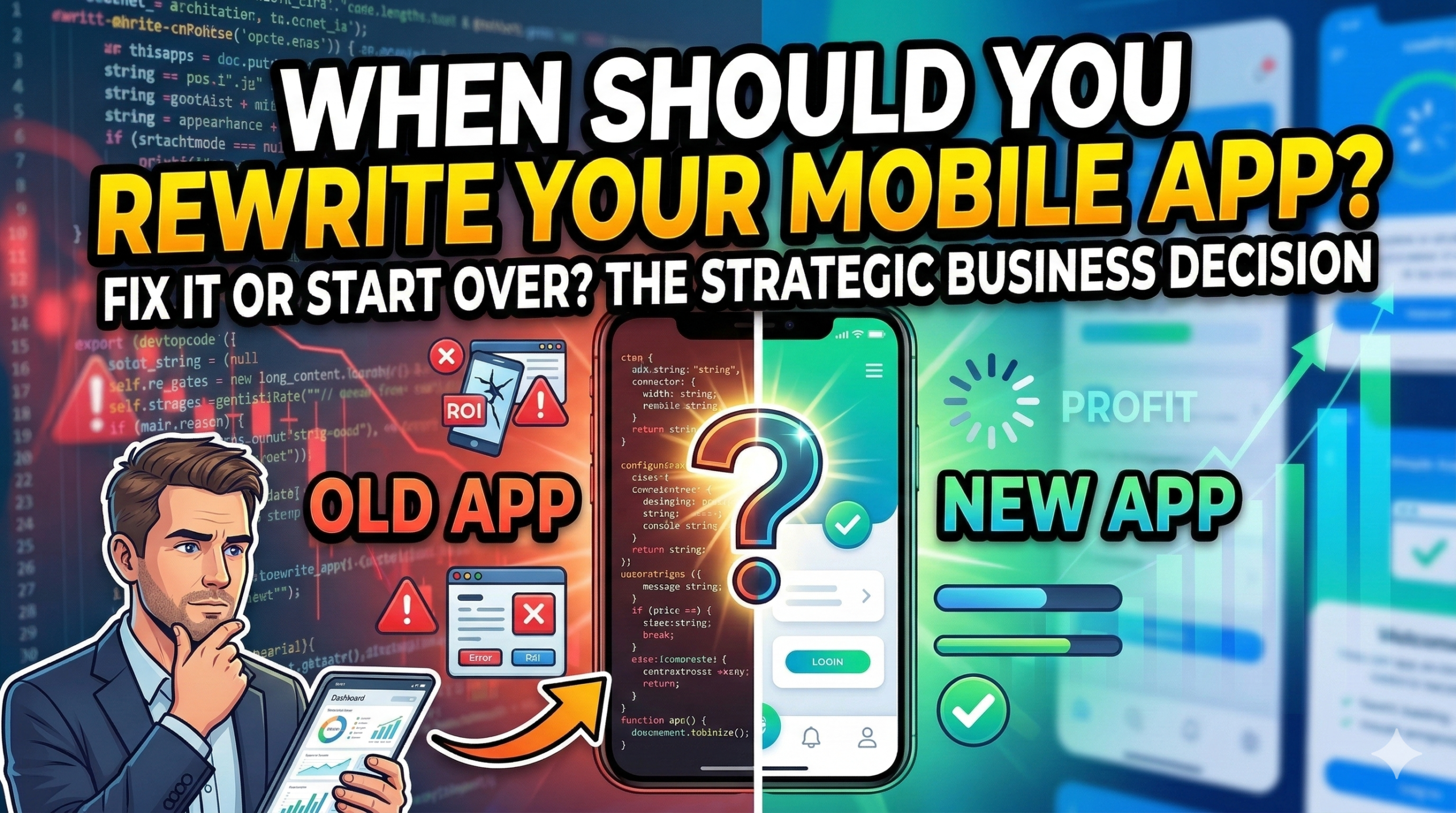
When Should You Rewrite Your Mobile App?

When_Should_You Rewrite_Your_Mobile_App

Rewriting a mobile app is a big decision. It costs time, money, and engineering effort. But in many cases, not rewriting your app is even more expensive.

If your app is slow, unstable, hard to maintain, or blocking new features, it may be time for a complete mobile app rewrite.

In this guide, we’ll explain:

  • When you should rewrite your mobile app
  • Signs your app architecture is failing
  • Rewrite vs refactor: what’s the difference
  • How to plan a successful app rebuild
  • How much a mobile app rewrite costs

If you’re currently struggling with app performance, technical debt, or scaling issues, this article will help you decide the right next step.

What Does “Rewriting a Mobile App” Mean?

A mobile app rewrite means rebuilding your app’s codebase from scratch while preserving the core business idea.

This is different from:

  • Minor bug fixes
  • Feature updates
  • UI redesign
  • Small refactors

A rewrite typically involves:

  • Rebuilding the app using modern frameworks (Swift, SwiftUI, Kotlin, Jetpack Compose)
  • Redesigning the architecture
  • Cleaning up technical debt
  • Improving performance and scalability

If you’re unsure about your app’s foundation, consider reviewing your overall
👉 mobile app development strategy

7 Clear Signs You Should Rewrite Your Mobile App

1. Your App Is Constantly Crashing

Frequent crashes are a red flag. If your app:

  • Has low App Store or Play Store ratings
  • Generates high support complaints
  • Breaks with every OS update

You may have deep architectural issues that can’t be fixed with patches.
A full mobile app rewrite may be more cost-effective than continuous firefighting.


2. Your Codebase Is Unmaintainable

If developers say:

  • “It’s too risky to touch this code”
  • “We don’t know how this works”
  • “Adding features takes forever”

You likely have serious technical debt.
Poor architecture slows innovation and increases development costs long-term.

👉 If you’re unsure whether your app needs a rewrite or refactor, read
How Much Does It Cost to Build a Mobile App? to understand rebuild cost implications.


3. Performance Is Slow and Unreliable

Users expect fast, responsive apps.
Common performance problems include:

  • Long loading times
  • UI freezes
  • High battery consumption
  • Backend bottlenecks

Modern app development frameworks significantly improve performance compared to older stacks.
If your app was built 5–8 years ago, it may not meet today’s performance standards.


4. You’re Expanding Features But Architecture Can’t Support It

Many startups start with an MVP (Minimum Viable Product). But if the MVP wasn’t built to scale, growth becomes painful.
Signs you’ve outgrown your MVP architecture:

  • Adding new features breaks existing ones
  • Backend struggles with traffic
  • Database structure is messy
  • App scaling increases cloud costs dramatically

This is a common moment when founders consider rewriting their mobile app.


5. You Want to Switch Platforms or Tech Stack

Technology evolves.
You may want to:

  • Move from legacy Objective-C to Swift/SwiftUI
  • Migrate from Java to Kotlin
  • Replace hybrid frameworks with native development
  • Shift to modern cross-platform architecture

If your tech stack is outdated, maintaining it becomes expensive and risky.

👉 If you’re evaluating platform strategy, read
iOS vs Android Development: Which Is Better?


6. Security Risks Are Increasing

Outdated code often means:

  • Security vulnerabilities
  • Poor encryption
  • Weak authentication
  • Non-compliance with modern standards

For fintech, healthcare, or SaaS apps, this is dangerous.
In such cases, a mobile app rebuild improves both security and compliance.


7. Development Costs Keep Rising

Ironically, older apps become more expensive to maintain than to rewrite.
If:

  • Bug fixes take weeks
  • Every feature requires rework
  • Developer onboarding is slow

You’re losing money every month.
A structured mobile app rewrite can reduce long-term development cost.

Rewrite vs Refactor: What’s the Difference?

Before rewriting, ask:
Can this be refactored instead?

Refactor = Improve existing code without changing core structure
Rewrite = Rebuild from scratch with new architecture

Rewrite makes sense when:

  • Core architecture is flawed
  • Tech stack is obsolete
  • Performance is fundamentally broken
  • Scaling is impossible

If only parts of the system are problematic, a partial rewrite may work.
👉 Our software development & architecture team helps businesses audit their codebase before making this decision.

How Much Does It Cost to Rewrite a Mobile App?

Mobile app rewrite cost depends on:

  • Current app complexity
  • Feature set
  • Backend requirements
  • Platform (iOS, Android, or both)
  • Design changes

In many cases, rewrite cost is similar to building a new app — but not always.

If you’re budgeting for rebuild, review our detailed guide:
👉 Mobile App Development Cost Breakdown

For most mid-sized apps, rewrite costs typically fall within realistic production-grade app budgets.

How to Plan a Successful Mobile App Rewrite

Rewriting without a plan is risky.
Here’s a proven approach:

1. Technical Audit

Evaluate:

  • Code quality
  • Backend structure
  • Performance bottlenecks
  • Security issues
2. Define Business Goals

Are you:

  • Scaling users?
  • Improving monetization?
  • Reducing maintenance cost?
  • Improving UX?

The rewrite must align with business strategy.

3. Improve Architecture First

Modern mobile app architecture should include:

  • Clean modular structure
  • API-driven backend
  • Scalable cloud infrastructure
  • Testable code
4. Avoid Feature Creep During Rewrite

This is critical.
Don’t turn a rewrite into a complete product reinvention unless absolutely necessary.

Should Startups Rewrite Their MVP?

Sometimes yes.

If your startup MVP was built quickly for validation, it may not be designed for long-term scale.
If you’ve achieved product-market fit, it might be time to move from MVP to production-grade app.

How Nerdware Labs Handles Mobile App Rewrites

At Nerdware Labs, we’ve worked with startups and businesses whose apps:

  • Were unstable
  • Had messy codebases
  • Couldn’t scale
  • Were built by previous agencies without clean architecture

Our approach includes:

  • Codebase audit
  • Architecture redesign
  • Performance optimization
  • Clean native development (Swift, SwiftUI, Kotlin)
  • Scalable backend integration
  • Clear communication & ownership

We don’t recommend rewrites unless they are necessary. But when they are, we rebuild properly.

Final Thoughts: Rewrite Only If It Unlocks Growth

Rewriting your mobile app is not about ego — it’s about unlocking performance, scalability, and long-term efficiency.
You should consider a mobile app rewrite if:

  • Technical debt blocks innovation
  • Performance frustrates users
  • Security risks are rising
  • Maintenance costs are exploding
  • Architecture cannot scale

If you’re unsure whether you need a rewrite, refactor, or optimization, get clarity first.

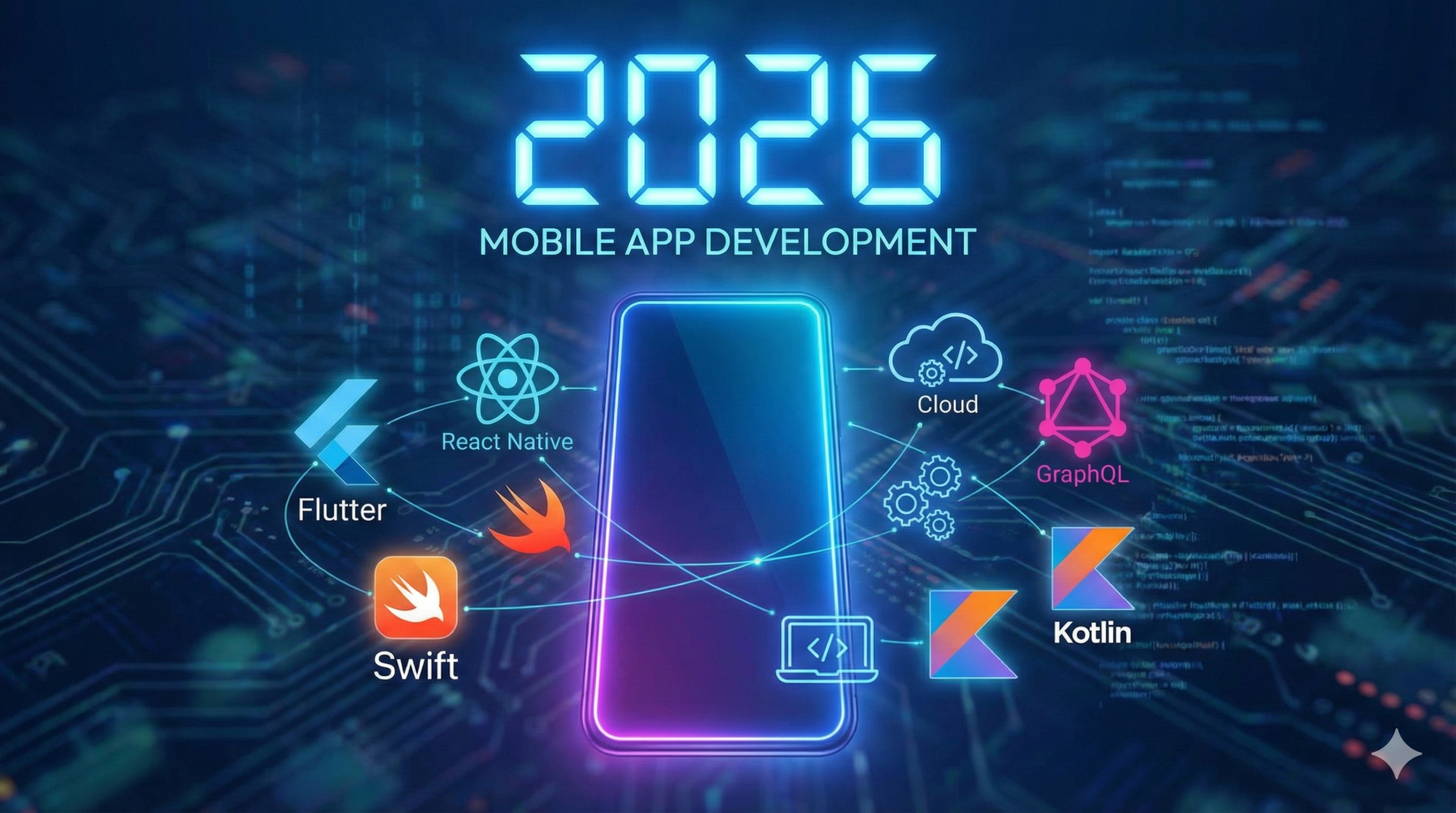
Best Tech Stack for Mobile App Development in 2026

best_tech_stack_for_mobile_app_2026

Choosing the best tech stack for mobile app development is one of the most important decisions startups and businesses make before building an app.

The right mobile app technology stack affects:

  • Development cost
  • Time to launch
  • App performance
  • Scalability
  • Long-term maintenance

In 2026, mobile apps are no longer just about screens — they require scalable backends, real-time systems, AI integrations, and cloud-ready architecture.

👉 If you’re planning to build an app: Explore Our Mobile App Development Services

What Is a Mobile App Tech Stack?

A mobile app tech stack is the combination of:

  • Programming languages
  • Frameworks
  • Backend technologies
  • Databases
  • Cloud infrastructure

that power your mobile application.

Choosing the wrong stack can lead to:
❌ Slow performance
❌ Expensive rewrites
❌ Scaling issues

Choosing the right stack helps you:

✔ Launch faster
✔ Reduce costs
✔ Build scalable products

Native vs Cross-Platform Tech Stack in 2026

Before selecting tools, you must choose your approach.

Native App Development Stack

Native apps are built specifically for:

  • iOS
  • Android

They offer:

✔ Best performance
✔ Better security
✔ Long-term scalability

Learn more here:
iOS Vs Android: Which platform you should build first ?

Cross-Platform Development Stack

Cross-platform apps allow you to build for:

  • iOS
  • Android

using a shared codebase.

They help:

✔ Reduce development cost
✔ Launch faster
✔ Build MVPs efficiently

👉 Many startups start with cross-platform MVPs before scaling.

Best iOS Tech Stack in 2026

If you’re building for Apple users, this is the modern stack:

Language
  • Swift

Swift continues to dominate iOS app development due to:

  • Performance
  • Safety
  • Apple ecosystem support
UI Framework
  • SwiftUI

SwiftUI enables:

✔ Faster UI development
✔ Cleaner architecture
✔ Real-time previews

👉 This is the stack we use for scalable iOS apps at Nerdware Labs

Best Android Tech Stack in 2026

Android continues to power the majority of global mobile users.

Language
  • Kotlin

Kotlin is now the industry standard for Android app development.

UI Framework
  • Jetpack Compose

Jetpack Compose enables:

✔ Modern UI
✔ Faster iteration
✔ Reduced boilerplate code

If your app targets mass adoption, Android is often essential.

👉 Learn the cost implications here: Mobile App Development Cost Guide

Best Cross-Platform Stack in 2026

For startups and MVPs, cross-platform remains powerful.

Flutter

Flutter continues to lead in:

  • Performance
  • UI consistency
  • Startup MVP development

Best for:

✔ MVP apps
✔ Budget-conscious startups
✔ Fast launches

Backend Tech Stack for Mobile Apps

Mobile apps need scalable backend systems.

Recommended Backend Stack
ComponentTech
API LayerNode.js / PHP / Python
AuthenticationJWT / OAuth
RealtimeWebSockets
CloudAWS / GCP

Backend architecture directly impacts:

  • Performance
  • Security
  • Scalability

👉 See how we architect scalable systems: Software Development & Cloud Solutions

Best Database Stack in 2026

Choosing the right database depends on app type.

SQL Databases
  • PostgreSQL
  • MySQL

Best for:

✔ Structured data
✔ Reliability

NoSQL Databases
  • MongoDB
  • Firebase

Best for:

✔ Real-time apps
✔ Rapid scaling

Cloud & DevOps Stack

Modern mobile apps are cloud-first.

Recommended stack:

  • AWS
  • Google Cloud
  • Docker
  • CI/CD pipelines

Cloud-ready apps scale faster and reduce downtime.

AI-Ready Mobile Stack (Future-Proofing)

In 2026, apps increasingly integrate:

  • AI recommendations
  • Personalization
  • Automation

Tech like:

  • TensorFlow
  • OpenAI APIs

are becoming part of modern stacks.

Best Tech Stack for Startup MVPs

If you’re building an MVP, the ideal stack is:

✔ Fast
✔ Cost-efficient
✔ Scalable

Typical MVP stack:

  • Flutter (frontend)
  • Node.js backend
  • PostgreSQL
  • AWS

Most MVP apps today fall between
👉 $10,000 – $40,000
when built efficiently.

How to Choose the Right Mobile App Stack

Ask yourself:

  • Who is your target audience?
  • What’s your budget?
  • Do you need scalability?
  • Do you need speed-to-market?

There is no universal stack — only the right stack for your product.

Why Businesses Choose Nerdware Labs

At Nerdware Labs, we help startups and businesses:

✔ Choose the right tech stack
✔ Build scalable mobile apps
✔ Launch MVPs faster
✔ Avoid costly rebuilds

With 14+ years of experience, we design technology stacks that grow with your business.

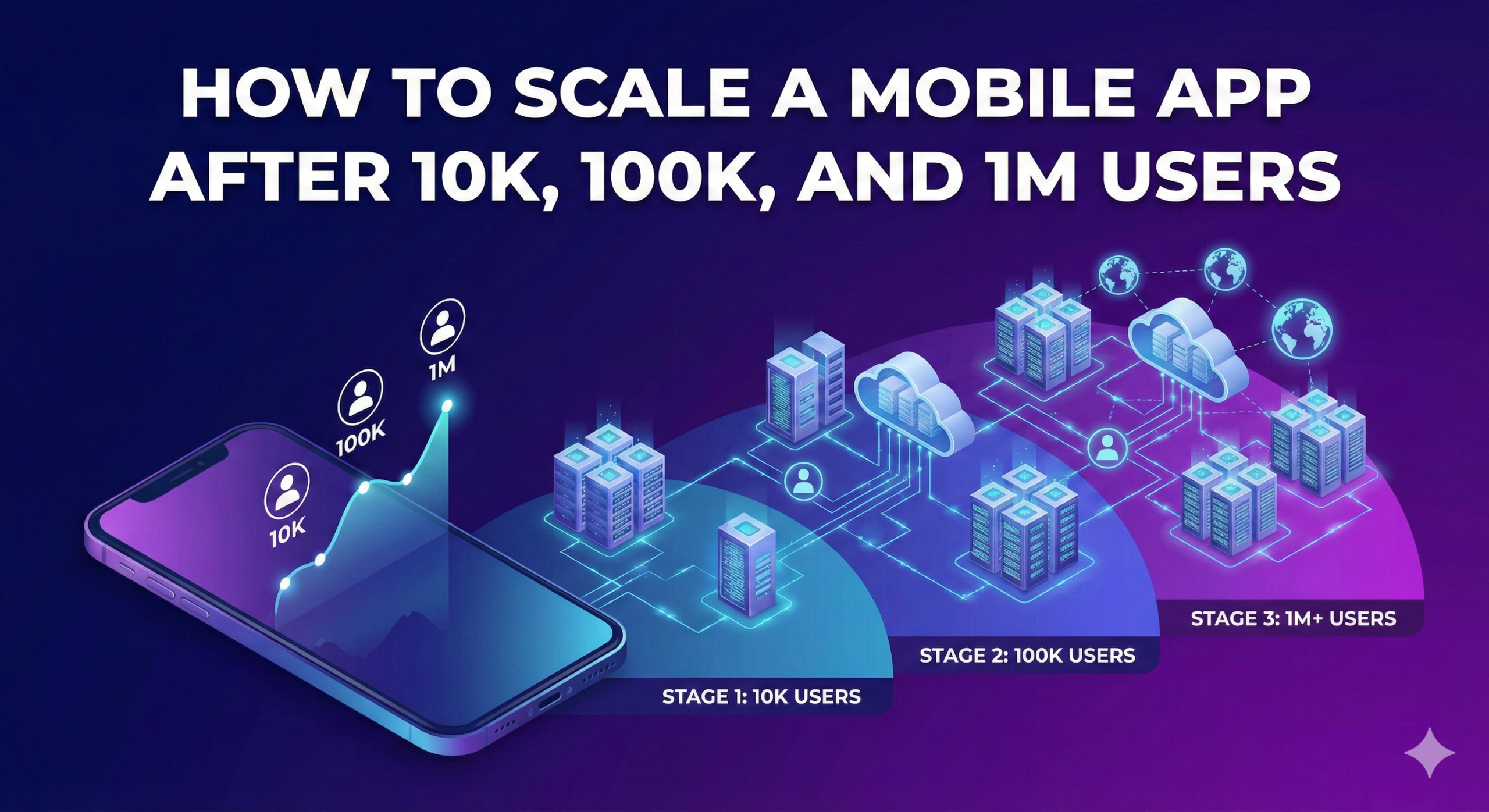
How to Scale a Mobile App After 10K, 100K, and 1M Users

how-to-scale-a-mobile-app

Launching a mobile app is a big milestone — but scaling it successfully is what determines long-term success.

Many startups build great apps, reach early traction, and then struggle when growth begins. Performance slows down, infrastructure becomes unstable, and user experience suffers.

Scaling isn’t just about adding servers.
It’s about building the right architecture, backend systems, and user experience to support real growth.
If you’re planning to build or scale an app, it’s critical to understand how scaling works at:

  • 10K users
  • 100K users
  • 1M users

If you’re still planning your product, check out our
How Much Does It Cost to Build a Mobile App to understand the cost implications of scalable architecture.

Why Scaling a Mobile App Matters

User growth often brings unexpected technical challenges.
Without proper planning, growth can lead to:

  • Slow performance
  • App crashes
  • API failures
  • High infrastructure costs
  • Poor user retention

Scaling correctly ensures your mobile app:

✔ Handles user spikes
✔ Maintains performance
✔ Supports long-term growth
✔ Delivers consistent user experience

If you’re deciding platform strategy before scaling, read:
iOS vs Android Development: Which Is Better?

Scaling After 10K Users

Reaching 10,000 users is your first real stress test.

At this stage, focus on stability.

1. Optimize Your Backend

Most MVP apps are built quickly — not built to scale.
Now is the time to:

  • Improve API performance
  • Optimize database queries
  • Reduce response times

Our Software Development & Cloud Solutions help startups strengthen backend systems before traffic grows further.

2. Add Load Handling

Introduce:

  • Load balancing
  • Caching
  • API monitoring

This ensures your app doesn’t crash during traffic spikes.

3. Start Tracking User Behavior

Use analytics to understand:

  • Feature usage
  • Drop-offs
  • Retention

This helps prioritize improvements before scaling further.

Scaling After 100K Users

At 100K users, your app becomes a real product.
This is where poor architecture begins to break.

1. Shift to Scalable Architecture

You may need:

  • Microservices
  • Queue-based processing
  • Horizontal scaling

Apps built without scalable architecture often fail here.
This is why building scalable systems early matters — something we prioritize in our Mobile App Development Services

2. Improve Database Performance

At this stage:

  • Single databases struggle
  • Read replicas become necessary
  • CDN usage improves performance
3. Optimize User Experience

More users = higher expectations.

Ensure:

  • Fast load time
  • Smooth UI
  • Reliable APIs

User retention depends heavily on performance.

4. Strengthen Security

Growth increases data exposure.

Now is the time to implement:

  • Secure authentication
  • Encryption
  • Rate limiting

Scaling After 1M Users

This is enterprise-level scale.

Now scaling becomes continuous.

1. Move to Full Cloud Infrastructure

You may require:

  • Auto-scaling servers
  • Multi-region deployment
  • Failover systems

Our Custom Cloud Solutions support growing apps at this stage.

2. Introduce DevOps Monitoring

You must monitor:

  • Server health
  • App performance
  • User flows

Scaling is no longer manual — it becomes operational.

3. Optimize Costs

Infrastructure costs grow fast.

Reduce:

  • Unnecessary API calls
  • Storage load
  • Processing waste

Smart architecture prevents cost explosions.

4. Maintain UX Consistency

At scale:

  • Lag increases
  • Small UX issues grow bigger

Many companies revisit UI/UX during this stage.

Common Scaling Mistakes

Avoid:

❌ Ignoring backend architecture
❌ Scaling too late
❌ Overengineering too early
❌ Weak monitoring
❌ Poor database planning

Most scaling failures happen because apps weren’t built with growth in mind.

Build for Growth from Day One

Successful apps scale smoothly because they:

  • Start lean
  • Plan ahead
  • Evolve gradually

At Nerdware Labs, we help startups build:

✔ Scalable MVPs
✔ Production-ready mobile apps
✔ Cloud-ready backend systems

Final Thoughts

Scaling happens in stages:

  • 10K users → Stability
  • 100K users → Architecture
  • 1M users → Infrastructure

The earlier you prepare, the smoother your growth journey will be.

🚀 Need Help Scaling Your Mobile App?

Whether you’re preparing for growth or already experiencing traffic challenges:
👉 Book a Free Consultation

We help startups and businesses build mobile apps designed to scale from day one.