
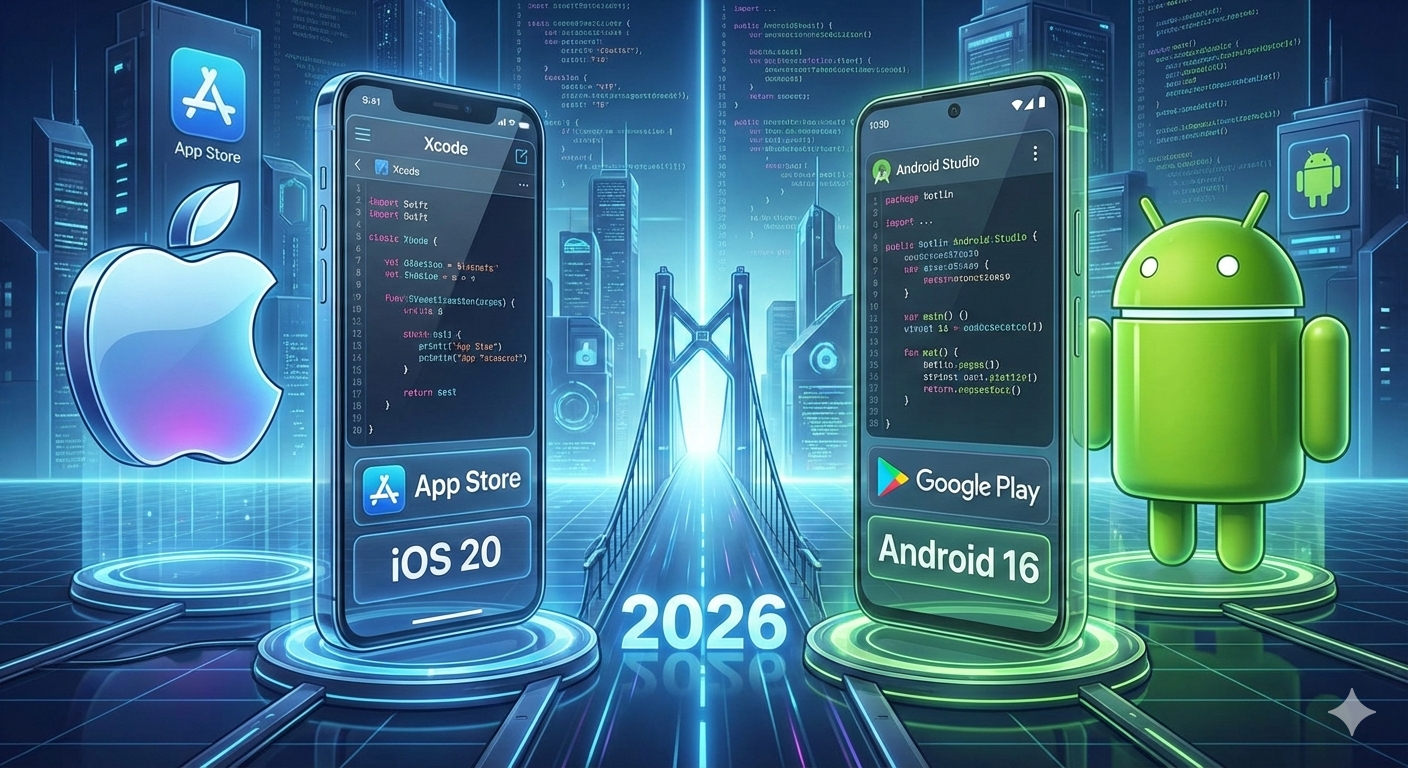
Choosing between iOS vs Android development is one of the most important decisions founders and businesses make when building a mobile app. The right platform impacts your development cost, time-to-market, monetization, and long-term scalability.
Quick Answer: iOS vs Android — Which Is Better?
There is no one-size-fits-all answer. The better platform depends on your target audience, budget, business goals, and growth strategy.
- iOS development is ideal for premium users, faster MVPs, and higher monetization.
- Android development works best for mass adoption and global reach.
Market Share & Audience Differences
Android Market Share
Android dominates global smartphone usage, especially in India, Southeast Asia, Africa, and South America. If your app targets large-scale adoption or emerging markets, Android is often the preferred platform.
iOS Market Share
While iOS has a smaller global market share, its users tend to spend more on apps and subscriptions. iOS performs particularly well in the US, Canada, Europe, and Australia.
Development Cost Comparison
iOS App Development Cost
iOS apps are typically faster to build due to fewer device variations and a controlled ecosystem. This often results in lower MVP costs and quicker launches.
Android App Development Cost
Android development involves supporting many devices, screen sizes, and OS versions. While initial development can be affordable, testing and maintenance costs may increase over time.
At Nerdware Labs, most startup MVPs we build typically fall between $10,000 and $40,000, depending on scope, features, and platform. If you want a deeper breakdown of pricing, timelines, and hidden costs, read our detailed guide on how much it costs to build a mobile app .
Development Speed & Time to Market
iOS Development Speed
Swift and SwiftUI allow faster iteration, cleaner architecture, and predictable testing. This makes iOS ideal for startups racing to launch an MVP.
Android Development Speed
Kotlin and Jetpack Compose are powerful, but Android apps require more QA due to device fragmentation. This can extend timelines slightly.
UI/UX & Design Consistency
Apple’s Human Interface Guidelines create consistent user experiences across iOS devices, making it easier to deliver polished UX. Android offers more design freedom but introduces additional complexity.
App Store Approval & Distribution
Apple App Store
Apple enforces stricter review guidelines, resulting in higher-quality apps and stronger user trust.
Google Play Store
Google Play approvals are faster and more flexible, making Android suitable for rapid experimentation and iteration.
Monetization & Revenue Potential
iOS users are more willing to pay for apps and subscriptions, while Android apps often perform better with ad-based monetization and large install volumes.
Security & Performance
iOS benefits from a closed ecosystem and faster OS adoption, making it a strong choice for fintech, healthcare, and enterprise apps. Android security has improved significantly but still varies by device manufacturer.
Should You Build Cross-Platform?
Cross-platform frameworks can reduce time and cost, but native development often delivers better performance and long-term scalability. Many startups begin with one platform before expanding.
Final Verdict: Which Platform Should You Choose?
- Choose iOS for faster MVPs, premium users, and subscriptions.
- Choose Android for global reach and mass adoption.
- Choose both when your product is validated and ready to scale.
Need expert guidance on choosing the right platform? Our mobile app development team helps startups make the right technical decisions from day one.
Ready to Build, Scale, or Improve Your Digital Product?
Whether you’re planning a new app, launching a website, improving SEO, or refining your product design, our team helps you make the right decisions and execute with confidence.
Get a Free Consultation
2 thoughts on “iOS vs Android Development: Which Is Better for Your App in 2026?”