
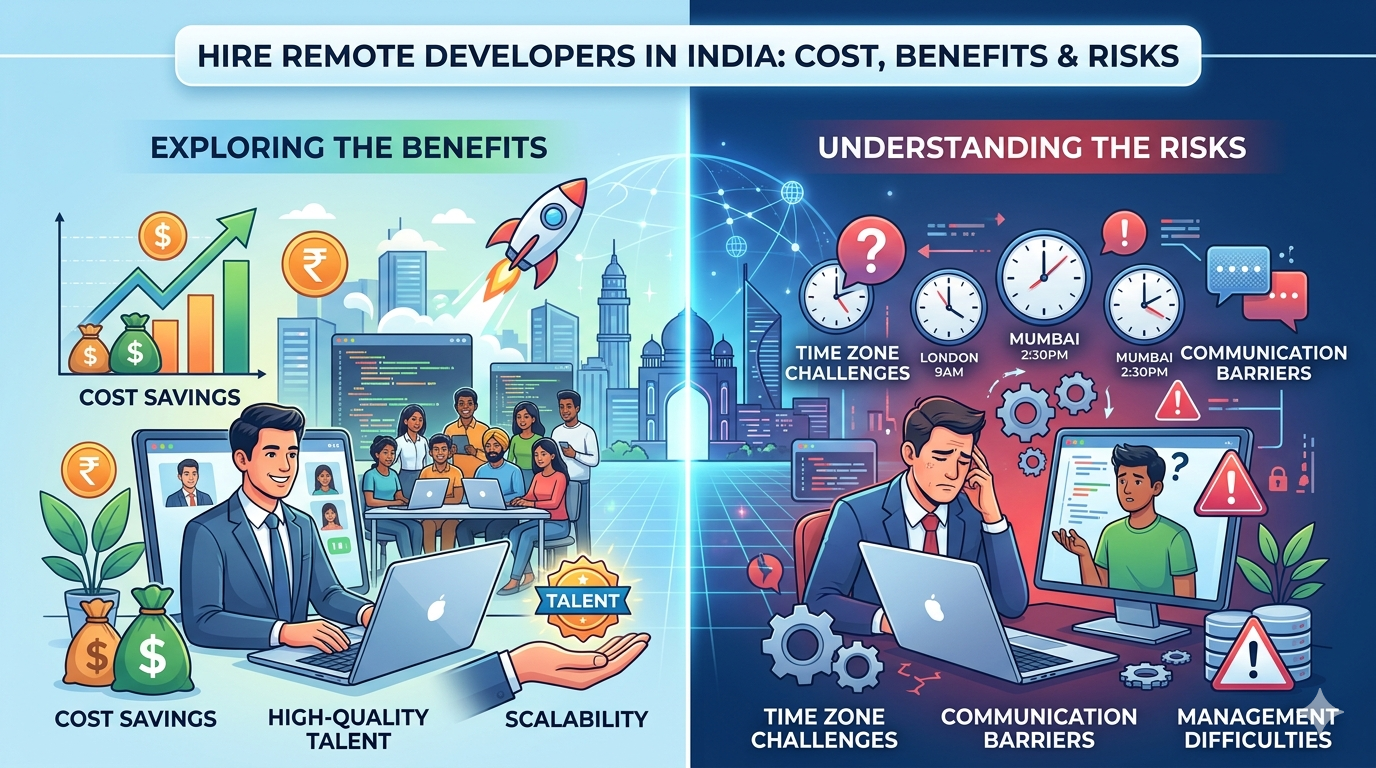
When companies start scaling their tech teams, one question almost always comes up: should you hire in-house developers or go with remote developers?
At first glance, the answer seems obvious—remote developers are cheaper. But once you dig deeper, the cost comparison becomes more nuanced. This article breaks down the real costs, hidden expenses, and long-term ROI of both models so you can make a financially sound decision.
Understanding the Two Models
Before comparing costs, let’s clarify what each model means.
In-house developers are full-time employees working from your office or headquarters. They are embedded in your company culture and typically work fixed hours.
Remote developers, on the other hand, work from different locations—sometimes even different countries. They can be full-time, part-time, or contract-based.
Direct Cost Comparison
1. Salary & Compensation
The most obvious difference lies in salaries.
- In-house developers demand higher salaries, especially in tech hubs.
- Remote developers can be hired globally, often at significantly lower rates.
For example:
- A senior iOS developer in the US: $120,000–$180,000/year
- A remote developer from Eastern Europe or India: $30,000–$70,000/year
👉 This is where businesses see immediate cost savings with remote development teams.
2. Infrastructure & Office Costs
Hiring in-house isn’t just about salaries.
You also pay for:
- Office space
- Electricity & internet
- Workstations & hardware
- Office perks (food, transport, etc.)
These expenses can add 20–30% extra cost per employee.
With remote developers:
- No office space required
- Reduced hardware costs (often self-managed)
👉 This makes remote hiring a cost-efficient option, especially for startups.
3. Recruitment & Onboarding Costs
Hiring in-house involves:
- Recruitment agencies
- HR teams
- Interview logistics
- Onboarding programs
Remote hiring, especially through platforms or outsourcing partners, can:
- Reduce hiring time
- Lower recruitment costs
- Provide pre-vetted developers
👉 Many companies now prefer remote developer hiring platforms to optimize cost and speed.
4. Employee Benefits & Compliance
In-house developers require:
- Health insurance
- Paid leaves
- Retirement contributions
- Legal compliance (taxes, labor laws)
Remote developers (especially contractors):
- Typically don’t require benefits
- Reduce compliance overhead
👉 This significantly lowers the total cost of ownership (TCO) for remote teams.
Hidden Costs You Shouldn’t Ignore
This is where most comparisons fall short.
In-House Hidden Costs
- Office expansion as team grows
- Employee attrition and rehiring
- Productivity loss due to office distractions
Remote Hidden Costs
- Communication gaps
- Time zone differences
- Need for collaboration tools
- Management overhead
👉 If not managed properly, remote teams can incur productivity losses, offsetting cost savings.
Productivity vs Cost: The Real Trade-Off
Many businesses assume cheaper means better. That’s not always true.
In-house teams offer:
- Better collaboration
- Faster decision-making
- Stronger company culture
Remote teams offer:
- Access to global talent
- Flexible scaling
- Cost savings
The key question becomes:
👉 Do you want control or cost efficiency?
When In-House Developers Make Sense
Choose in-house if:
- You’re building a core product requiring tight collaboration
- Security and data privacy are critical
- You need real-time decision-making
- Long-term team stability is a priority
When Remote Developers Are the Better Choice
Go remote if:
- You want to reduce development costs
- You need to scale quickly
- You’re hiring for short-term or specialized projects
- Budget constraints are a concern
Hybrid Model: The Best of Both Worlds
Many companies today are adopting a hybrid development model:
- Core team in-house
- Extended team remote
This approach:
- Balances cost and control
- Improves scalability
- Reduces operational risks
👉 If you’re unsure, this is often the safest starting point.
Internal Resources You Might Find Helpful
To go deeper into optimizing your development strategy, check out:
Final Verdict
There’s no one-size-fits-all answer.
- If your priority is cost savings, remote developers clearly win.
- If your priority is control and collaboration, in-house developers are the better choice.
However, the smartest companies don’t pick one—they combine both strategically.
Bottom Line
The decision isn’t just about cost—it’s about value per dollar spent.
Ask yourself:
- What stage is my business in?
- Do I need speed or stability?
- Can I manage remote teams effectively?
Once you answer these, the right choice becomes obvious.
If you’re planning to scale your development team and want a tailored cost breakdown, it’s worth analyzing your specific use case rather than relying on generic comparisons.